
Ecotones: Bangladesh’s Overlooked Frontline of Biodiversity Conservation
By Md. Rabus Suny Zoha
Bangladesh is often described as a land of rivers, wetlands, forests and fertile plains. Yet, beyond these familiar geographical features lies another dimension of its natural wealth: ecotones, the transitional zones where two or more ecosystems meet and interact. Often overlooked in mainstream conservation policies, these areas play a vital role in maintaining biodiversity, supporting local livelihoods and strengthening the country’s resilience to environmental change.
From the mangrove-fringed estuaries of the Sundarbans to the seasonally flooded haors of the northeast and from the forested foothills of the Chattogram Hill Tracts to the dynamic coastal chars of the south, Bangladesh offers diverse landscapes where ecological boundaries sustain an extraordinary range of life.
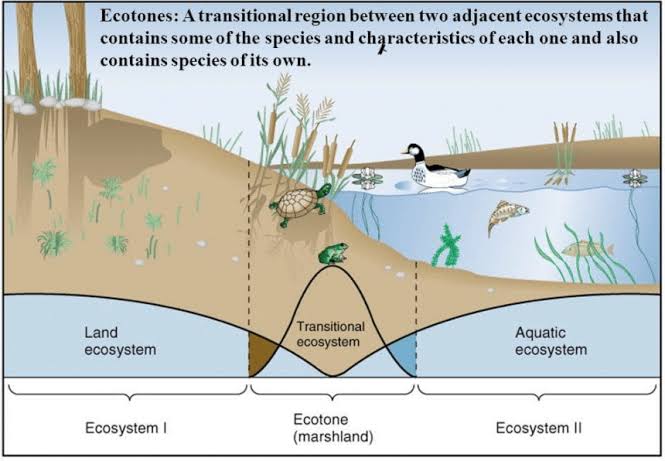
An ecotone is not simply a boundary between two ecosystems. It is an area of ecological interaction where environmental conditions, vegetation and wildlife from neighbouring ecosystems may overlap. These transitional environments can support high species diversity, provide essential habitats and facilitate the movement of organisms between different ecological communities. However, their ecological significance often remains underappreciated in national conservation planning.
Where ecosystems meet, biodiversity thrives:
The Sundarbans and its adjoining river estuaries provide one of the most important examples of an ecotone in Bangladesh. Here, freshwater flows interact with tidal waters, creating a dynamic environment influenced by salinity, sedimentation and seasonal variations in river discharge. Mangrove forests, tidal creeks and adjoining aquatic habitats support diverse organisms, including fish, crabs, shrimp, birds and several threatened wildlife species.
The Sundarbans is globally recognised for its Bengal tiger population and its importance as a mangrove ecosystem. Its interconnected waterways also provide habitat for aquatic mammals, including Irrawaddy dolphins. The ecological relationships between mangrove forests and estuarine waters are particularly important for maintaining food webs, supporting aquatic productivity and sustaining the livelihoods of communities dependent on fishing and forest resources. In southeastern Bangladesh, the transition between the Chattogram Hill Tracts and the surrounding plains creates another important ecological setting. Forests, bamboo-dominated vegetation, streams and cultivated lands form a mosaic of habitats that support diverse plant and animal communities. These landscapes provide habitat for species such as hoolock gibbons and Asian elephants in suitable areas, while also sustaining medicinal plants and other forest resources.
However, the ecological integrity of these foothill zones is increasingly threatened by forest degradation, habitat fragmentation, agricultural expansion and human–wildlife conflict. Protecting isolated forest patches alone may not be sufficient if the surrounding transitional habitats that connect them are allowed to disappear.
The haor wetlands of Sunamganj, Kishoreganj and Netrokona illustrate another dimension of Bangladesh’s ecological diversity. These vast seasonal wetlands undergo dramatic transformations throughout the year. During the monsoon, extensive areas remain submerged, while the dry season exposes land suitable for agriculture.This seasonal transition supports aquatic vegetation, fish populations and waterbirds, including migratory species that use the wetlands as feeding and resting grounds. Connections between rivers, floodplains and wetlands are particularly important for fish movement, breeding and recruitment. When these connections are disrupted by embankments, poorly planned infrastructure or wetland degradation, the consequences can extend beyond biodiversity loss to food security and the incomes of fishing communities.
Along the southern coast, the formation of chars creates further transitional environments where land and water are in constant interaction. These landscapes are shaped by tidal processes, sediment deposition, erosion and changing salinity. Salt-tolerant vegetation, coastal birds, crabs and fish occupy different parts of these environments, depending on local ecological conditions. Although coastal chars can be highly dynamic and vulnerable to erosion, they may also support valuable habitats and provide opportunities for natural vegetation to establish. Their ecological functions deserve greater attention in coastal planning, particularly as sea-level rise, cyclones and salinity intrusion intensify existing environmental pressures.
The rivers descending from the hills, including the Sangu, Matamuhuri and Karnaphuli, also create transitional habitats where hill streams interact with lowland rivers and floodplains. These connections facilitate the movement of aquatic organisms and transport sediments and nutrients. Maintaining the ecological continuity of such river systems is therefore essential to the long-term health of both upland and lowland environments.
Why ecotones matter for conservation:
The conservation value of ecotones extends far beyond the number of species they support. These areas perform ecological functions that are fundamental to the stability of Bangladesh’s natural systems.
First, ecotones can provide complementary habitats for wildlife, including species that depend on more than one type of environment during different stages of their life cycles. The transition between mangroves and estuarine waters, for example, supports interconnected terrestrial and aquatic food webs. Similarly, the connections between wetlands and rivers are essential for many fish species.
Second, ecotones contribute to food security and rural livelihoods. River–wetland interfaces can provide fish habitats and support nutrient exchange across floodplains. Forest margins supply resources to communities, while coastal transitional zones may support fisheries and other livelihood activities. Their degradation can therefore affect both ecological health and the economic security of local populations.
Third, many ecotones help reduce environmental risks. Mangrove forests can dissipate wave energy and reduce the impacts of storm surges under suitable conditions. Wetlands can temporarily store floodwater, while naturally vegetated riverbanks can help stabilise soil and reduce erosion. These functions are especially important for Bangladesh, where densely populated settlements and livelihoods are exposed to floods, cyclones and other climate-related hazards.
However, such natural protection should not be treated as a substitute for effective disaster preparedness, appropriate infrastructure or climate adaptation planning. The effectiveness of these ecological buffers depends on their condition, extent and connection with surrounding landscapes. Ecotones also have considerable educational, scientific and cultural value. They offer opportunities to study ecological succession, species interactions, hydrological change and human–environment relationships. For students and researchers in environmental science, geography and conservation biology, these landscapes provide valuable settings for field-based learning and long-term ecological monitoring.
The growing threats to ecological transition zones:
Despite their importance, ecotones are increasingly exposed to human pressures. Rapid urbanisation, industrial expansion, deforestation, agricultural intensification and poorly planned infrastructure can alter the environmental conditions that sustain them.In the Sundarbans and adjoining estuaries, changes in freshwater flows, pollution, habitat disturbance and salinity dynamics may affect the ecological balance. In the hill regions, forest clearance and fragmented land use can weaken habitat connectivity and increase pressure on wildlife.Wetland conversion, excessive fishing, pollution and poorly designed embankments threaten the ecological functions of haor and river–floodplain systems. Meanwhile, unplanned shrimp farming and inappropriate coastal development can alter local hydrology, increase salinity in surrounding areas and transform natural habitats.
Climate change adds another layer of complexity. Sea-level rise, changing rainfall patterns, extreme weather events and altered river flows can shift the boundaries between ecosystems. Some species may adapt to these changes, while others may lose suitable habitats or become isolated from the environments they need to survive.
A central challenge is that conservation efforts frequently focus on clearly defined forests, protected areas or individual species. Ecological transitions, by contrast, often extend across administrative boundaries and land-use categories. As a result, they can fall between the responsibilities of different institutions and remain insufficiently represented in conservation priorities.
Rethinking conservation: From isolated habitats to connected landscapes
Bangladesh needs a more integrated approach to biodiversity conservation—one that recognises ecotones as essential components of functioning landscapes rather than incidental spaces between established ecosystems.
The first step is to identify and map ecologically significant transition zones through field surveys, remote sensing, geographic information systems and biodiversity assessments. Such mapping should consider seasonal variations, hydrological connectivity, land-use change and the habitat requirements of local species.
Second, ecotone conservation should be incorporated into land-use planning, environmental impact assessments and protected-area management. Development projects near wetlands, forests, riverbanks and coastal habitats should be evaluated not only for their direct environmental impacts but also for their potential to disrupt ecological connections.
Third, community participation must become central to conservation. Local communities often possess detailed knowledge of seasonal flooding, fish migration, vegetation change and wildlife behaviour. Supporting sustainable fishing, responsible forest-resource use, wetland restoration and alternative livelihood opportunities can help align conservation goals with local economic needs.
Fourth, existing environmental and conservation laws must be implemented more effectively. Coordination among forest, fisheries, water-resource and local government authorities is essential because the ecological processes that sustain ecotones do not follow administrative boundaries.
Finally, universities and research institutions should be encouraged to conduct long-term monitoring of ecotones. Baseline data on species diversity, water quality, vegetation, soil conditions and seasonal ecological change would help policymakers identify vulnerable areas and measure the effectiveness of conservation initiatives.
Protecting the spaces between Bangladesh’s ecological future depends not only on protecting its most prominent forests, rivers and wetlands but also on preserving the connections that allow these ecosystems to function as a whole.
Ecotones may appear to be marginal landscapes, but their ecological significance is far from marginal. They sustain biodiversity, support livelihoods, regulate environmental processes and strengthen the capacity of natural systems to respond to change.
As Bangladesh pursues economic development and climate resilience, conservation policies must move beyond the boundaries of individual habitats and embrace a landscape-based perspective. Protecting ecotones is not merely about preserving the spaces between ecosystems; it is about safeguarding the relationships that sustain life across them. The future of biodiversity conservation in Bangladesh will depend, in part, on whether these overlooked ecological frontlines receive the recognition and protection they deserve.
The is a student of the Department of Environmental Science and Geography at Islamic University, Kushtia, Bangladesh.